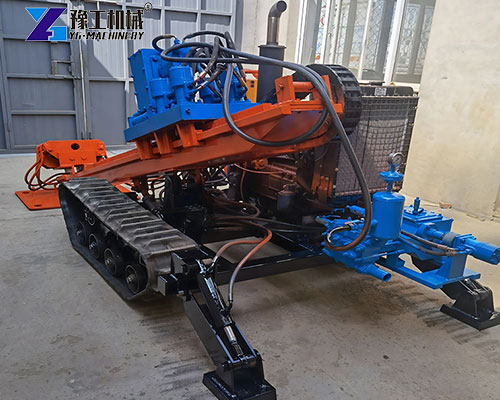
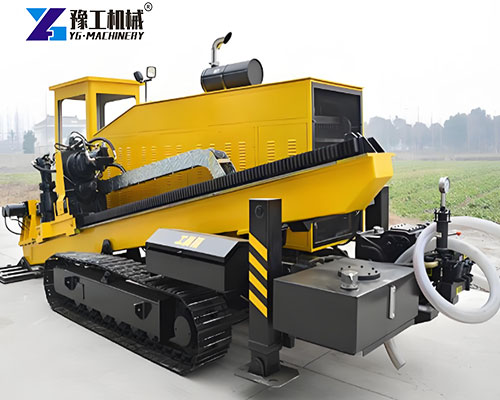
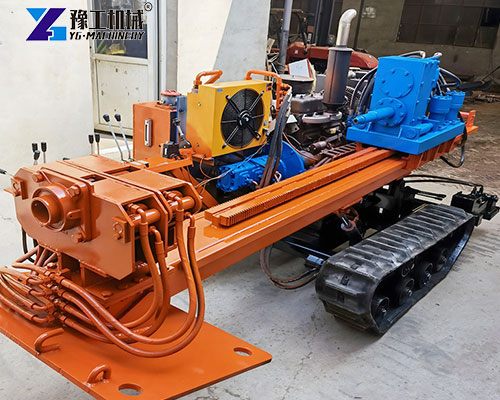
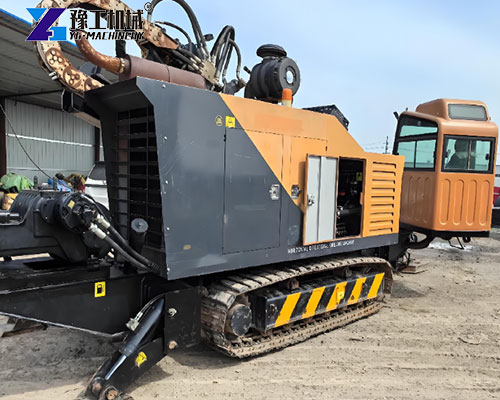
When taking on a river-crossing pipeline project, you may find insufficient torque after equipment arrives on site; you may encounter stuck drilling during reaming, putting construction at a standstill; each day of delay may lead to breach of contract risks. These situations are common in trenchless construction.
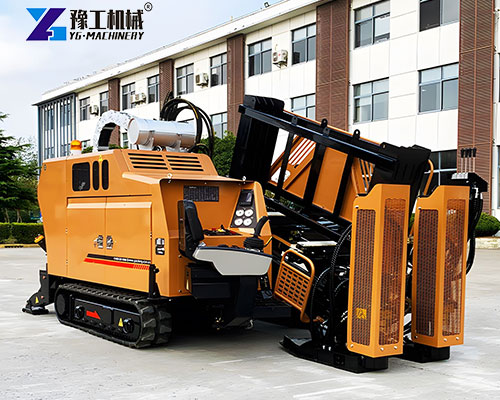
The operation process of hdd drill rig is far more than just “turn on and push forward”. Everything from matching model to pipe diameter and geology, to drill rod and bit configuration, and solutions for stuck pipe, affects whether the project runs smoothly. This article covers practical solutions to these common problems.【WhatsApp/WeChat/Phone】+86 13837122632
When selecting hdd drill rig, consider these factors:
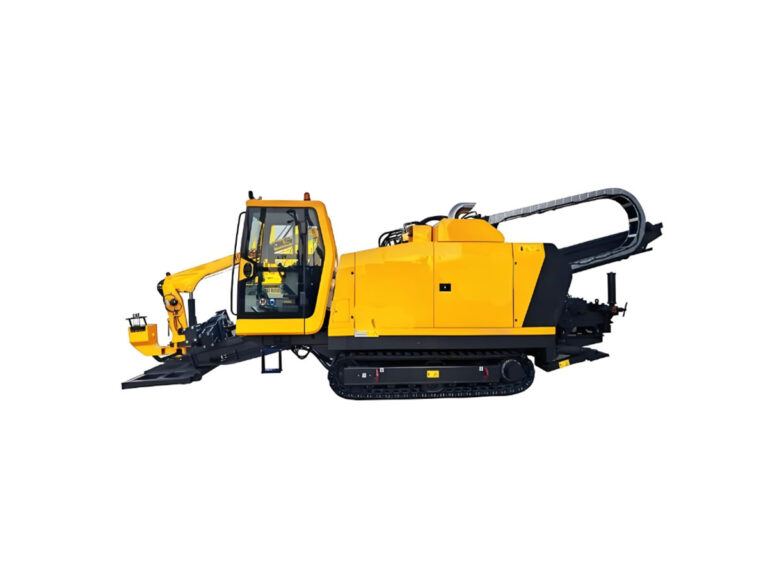
Project scale and pipe diameter: For small and medium projects with φ300–600mm pipes, YG 160A or YG 180 is enough. For φ800–1200mm pipes, choose higher-torque YG 320A. The maximum pipe length can reach 1500m; select the matching model based on actual distance.
Geological conditions: Most non-hard rock areas (clay, sand, silt) are suitable for standard models. For hard rock, choose higher-torque, higher-power machines with special rock bits.
Automation level: Modern hdd drilling equipment usually includes self-anchoring system, automatic drill rod handling, and automatic thread lubrication, greatly improving efficiency. Choose higher automation based on budget and needs.
Budget and cost performance: When checking directional drilling machine price, consider not only upfront cost but also durability, after-sales service and parts supply. Stable, low-maintenance equipment offers better long-term value.
How to Select Drill Rods and Bits for HDD Drill Rig
Drill rods and bits are key consumables for hdd drill rig. Proper selection directly affects efficiency and cost.
Drill rod types and selection
Standard drill rod: Made of high-strength alloy steel with good torsion and bending resistance, suitable for soft soil, sand and some gravel layers.
Curved drill rod: With a fixed bending angle for direction control, used in sections where angle adjustment is needed.
High-torque drill rod: Thickened, high-strength design for high torque, suitable for gravel, pebbles and rock, often used for large-diameter pipes.
Drill bit types and selection
Tapered bit / reamer: Used for hole expansion, suitable for soft soil, clay and sand. Cutting teeth can be replaced to extend life.
PDC / roller cutter bits: PDC bits are wear-resistant for gravel and rock; roller bits crush rock by rolling, ideal for hard formations.
Blade bit: Simple and low-cost, suitable for soft soil and sand, but not for stony ground.
Selection rules: Soft soil/sand — standard drill rod + blade bit; Gravel/pebble — high-torque drill rod + PDC bit; Rock — high-strength drill rod + roller cutter bit.
Drill rods suffer the most wear in hdd drilling equipment. To extend their life:
Rotate drill rod positions regularly: Rotate rods in the frame to spread wear evenly and reduce concentrated damage.
Thread inspection and lubrication: Check and measure thread wear regularly. Lubricate fully every time you connect rods to greatly extend service life.
Quality material and design: Premium rods use special alloy for flexibility, strength and durability. Single-piece rods with heated and upset ends provide consistent hardness and strong tapered connections.
Control operating parameters: Avoid long-term overloading. Maintain proper thrust and torque to reduce fatigue damage.
Key Points and Precautions for Reaming in HDD Drilling Equipment
Reaming is critical and directly affects pipe installation quality.
Reaming step design: Multiple passes are usually needed. Increase diameter by 100–150mm each time to avoid overloading.
Reamer selection: Full-face reamers can reach final diameter in one pass, replacing traditional multi-step reaming. Different cutters are available for various geology and are replaceable and recyclable.
Mud management: Mud cools the bit, carries cuttings and stabilizes the borehole. Use thicker, more viscous mud in loose formations; use high-density mud in sand and gravel to protect the hole wall.
Common issues and solutions
Necking: Common in soft soil, with mud backflow and high pullback pressure. Use slow pulling and rotating, and solid-phase mud for wall protection.
Hole collapse: Easy in sandy clay or loose fill, which may cause road cracking or sinking. Use high-gel solid mud. If collapse occurs near stones, remove them before reaming.
Common Causes of Stuck Pipe in Hdd Drill Rig and Solutions
Stuck pipe is one of the most difficult failures in hdd equipment operations.
Main causes
Borehole collapse: Low mud density or high fluid loss causes instability, especially in water-sensitive formations.
Cuttings settlement: Insufficient mud carrying capacity leads to cuttings buildup and jamming.
Necking: Unresolved hole shrinkage grips the drilling tool.
Solutions
Washover freeing: Use washover tools to clear obstacles around the stuck point and release the tool.
Jarring freeing: Use safety adapter + super jar to free the tool by repeated impacts. Too many shocks may be ineffective; combine with other methods.
Plug and side-track: If freeing fails, abandon the original hole and drill a new one. This takes time but allows the project to continue.
Prevention
Control mud density and fluid loss to stabilize the borehole.
Pull back to safe section when abnormalities appear, adjust mud, and improve plans before resuming.
Work quickly and continuously to finish piping before creep or collapse occurs.
If you have further questions about directional drilling machine price or model selection, feel free to contact YG for professional advice.【WhatsApp/WeChat/Phone】+86 13837122632