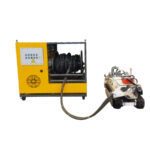
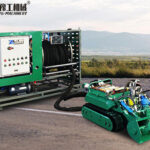
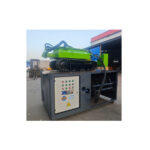
A 3-meter-tall, 400kg curtain wall insulated glass unit cannot be lifted by two workers, and four people struggle to align it. Traditional suction cup lifting tools also need a winch. This is a common problem every curtain wall installation project team faces.
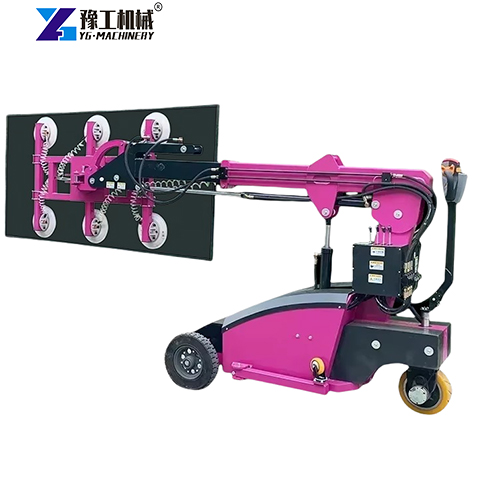
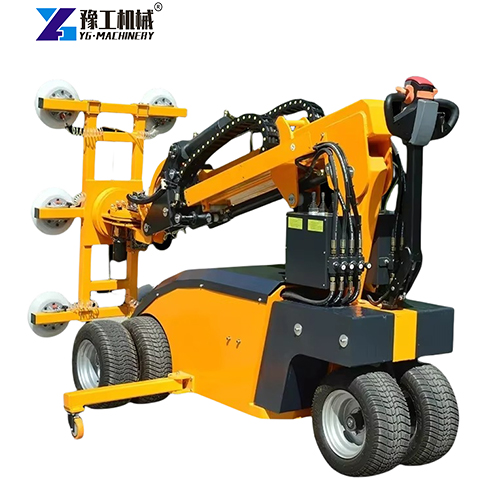
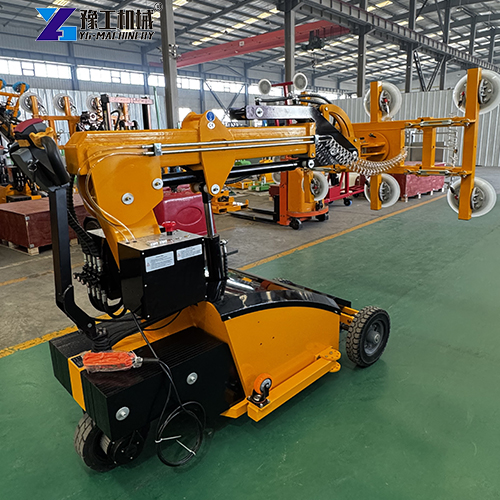
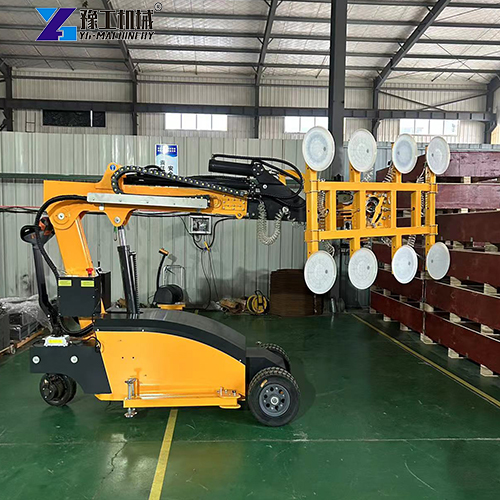
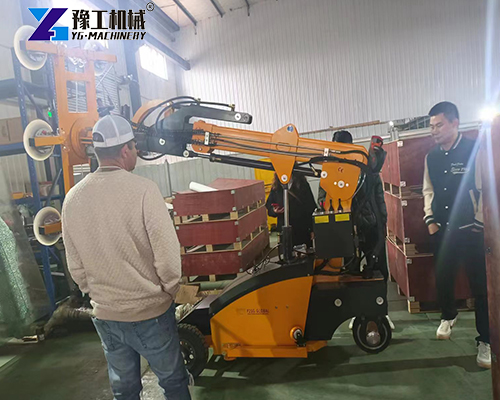
glazing robot is designed to solve this problem. It integrates vacuum suction, electric lifting, and multi-direction rotation into one self-propelled machine. A single operator can finish the whole process from material handling to precise positioning. No external power supply, no crane, no multi-person teamwork required.
The YG series includes five models, with load capacity ranging from 300 kg to 800 kg and lifting height from 3,500 mm to 5,000 mm. Below is the full specification comparison:
Model Type
YG-LD-300
YG-LD-400
YG-LD-500
YG-LD-600
YG-LD-800
Load Capacity
300kg(retract)150kg(extend)
400kg(retract)200kg(extend)
500kg(retract)250kg(extend)
600kg(retract)300kg(extend)
800kg(retract)400kg(extend)
Lifting Height
3500mm
3500mm
3700mm
3700mm
4500mm
QTY of Suction Cap
4pcs
4pcs
6pcs
6pcs
8pcs
Rubber Suction Cap
300mm
Ø300mm
Ø300mm
Ø300mm
Ø300mm
Maintenance-free Battery
2x12V/80AH
2x12V/100AH
2x12V/120AH
2x12V/120AH
2x12V/120AH
Battery Charger
Smart Charger
Smart Charger
Smart Charger
Smart Charger
Smart Charger
Drive motor
24V/1200W
24V/1200W
24V/1200W
24V/1200W
24V/1200W
Lifting Motor
24V/2000W/6L
24V/2000W/6L
24V/2000W/6L
24V/2000W/6L
24V/2000W/12L
Chassis L*W
2660*810mm
2660*810mm
2800*810mm
2800*810mm
2800*810mm
Driving Wheel
Ø250x80mm
Ø250x80mm
Ø300x100mm
Ø300x100mm
Ø300x125mm
Packing Size(mm)
2560*1030*1700
2560*1030*1700
2580*1050*1700
2580*1050*1700
3000*1250*2300
N.W/G.W
1100/1150kg
1280/1330kg
1300/1350kg
1400/1450kg
1600/1650kg
Loading Qty
1x20GP/40GP: 6SETS/12SETS
Movement
Automatic(4 kinds)
1. The suction cup frame flips 180° electrically. 2. The support plate automatically retracts. 3. Hydraulic arm lifts electrically. 4. The base of the whole machine moves 100-150mm horizontally.
Manual (2kinds)
1. The suction cup holder can be manually rotated 90 degrees (electrically powered optional). 2. The suction cup holder can be manually rotated 360 degrees (electrically powered optional).
Usages
Mainly used for the handling, movement, and installation of materials such as glass, marble, wood, iron plate, etc.
glazing robot is an electric vacuum suction lifting device, specially designed for handling, positioning, and installing large glass panels and other smooth-surface materials on construction sites.
Simply put, it replaces traditional manual handling of large glass panels. No more manpower lifting or simple hand tools. It firmly attaches to glass surfaces via electric suction cups, then completes lifting, rotation, and precise placement.
Differences from Ordinary Manual Suction Cup Tools
Load capacity: 300–800 kg per unit, far beyond the load range of manual suction cups
Working height: Lifting height of 3,500–5,000 mm, meeting installation needs for most floor-to-ceiling glass and curtain walls
Mobility: Electric travel + motor-driven wheels. One person can control the whole machine and its load
Precision: 360° rotation and 180° side flip for the suction cup frame, with extendable support arms for fine positioning
Safety: Independent vacuum control for each suction cup, power-off pressure retention device plus alarm system
Several practical factors drive construction teams to shift from traditional manual installation to using a glazing robot.
1. Larger glass panel sizes
Curtain wall glass used in modern commercial buildings keeps getting bigger. Some panels are over 3 meters high and weigh 200–500 kg each. Such panels cannot be installed manually at all.
2. Labor shortage and safety risks
Skilled curtain wall installers are in short supply worldwide. Manual handling of large glass panels brings:
Greatly higher risk of injury
Lower installation accuracy without professional equipment
Higher site insurance costs without mechanical lifting support
3. Faster installation speed
One glass lift robot lets a single operator lift, position, and hold glass in place, while a second worker fixes it. Work that once required 4–6 workers and repeated adjustments can now be finished by 2 people in less time.
4. Surface protection
Manual handling carries risks of scratches, bumps, or glass breakage from dropping. Glass vacuum lifting equipment distributes suction evenly across the glass surface, with no concentrated stress points, no friction marks, and no clamping damage.
5. Lower overall cost
Fewer workers needed per installation
Lower glass breakage rate
No crane rental required for medium-weight panels
Fully electric operation: no fuel cost and low maintenance cost
6. Multi-purpose for multiple jobs
The same glass lifter machine handles glass installation, stone panel positioning, and material transfer inside workshops. One machine serves multiple working scenarios throughout the whole project.
Key Technical Features of the Glass Lifter Machine
The YG series glass lifter machine adopts the following core engineering design, suitable for professional building construction.
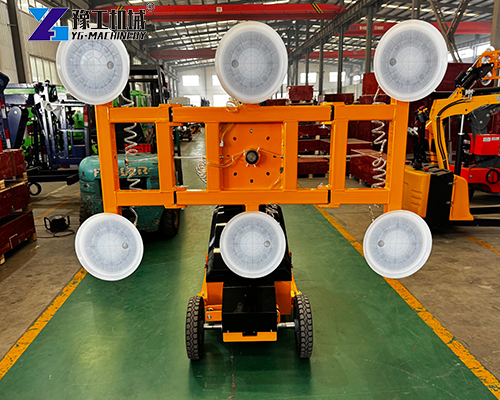
Electric vacuum suction system:
Each suction cup is independently controlled with separate vacuum valves
If one suction cup loses pressure, the rest keep supporting the load to prevent sudden dropping
Ø300 mm rubber suction cups deliver strong suction on smooth surfaces
Works for glass, ceramic, stone, and polished metal surfaces
Power-off safety system:
Maintenance-free batteries keep vacuum pressure in case of unexpected power loss
Alarm system alerts operators instantly
Pressure holding time is long enough for operators to safely lower the load
Glass will not fall even when the battery is disconnected
Electric lifting and travelling:
24V/2000W lifting motor delivers stable and controllable vertical movement
24V/1200W drive motor moves the whole machine with load
No manual pumping or pushing; fully electric operation
Smart charger protects battery health and extends cycle life
360° rotation and 180° side flip:
The suction cup frame can rotate 360° to precisely adjust panel orientation
180° side flip converts panels from horizontal to vertical
No on-site manual flipping of glass panels, which is dangerous and time-consuming for large panels
Extendable support arm:
Electric telescopic support arm adjusts the distance between panel and machine
Critical for scenarios needing a specific offset distance to feed glass into frames
Load rating differs between retracted and extended states. Always check the specification sheet before operation
Base fine adjustment:
The whole machine base can move horizontally by 100–150 mm
Enables fine alignment when placing panels
Final positioning without repositioning the whole machine
Optional extension bar:
Extension bars can be fitted to the suction cup frame for extra-large glass panels
Makes glass vacuum lifting equipment compatible with panels of different sizes without upgrading to a larger model
Q1: How does a glass lift robot stop glass from falling?
It uses multiple independent vacuum suction cups (4–8 pcs based on model). Each suction cup has an independent vacuum control valve. If one cup loses pressure, the rest keep suction. The system also has power-off pressure retention and sound-light alarms to remind operators in time.
Q2: Can glass vacuum lifting equipment work on textured or uneven glass?
It is designed for smooth, non-porous surfaces: standard building glass, polished stone, ceramic, and metal sheets. Heavy frosted, textured, or uneven surfaces may not form a reliable vacuum seal. A suction test before full-load lifting is recommended.
Q3: Does the machine need on-site power supply?
No. It uses maintenance-free batteries (24V system) for fully wireless operation on construction sites without power sockets, which is especially useful for new sites with no power connected. A smart charger comes with the machine for charging during shift breaks.
Q4: How many workers are required for operation?
One operator can control the whole glass lifter machine. Travel, lifting, rotation, and positioning are all done via the machine control panel. Usually, a second worker guides the panel into the frame and fastens it, but lifting and positioning itself is finished independently by one person.
Q5: What is the difference between retracted and extended load capacity?
Glass vacuum lifting equipment reaches its maximum rated load when the support arm is fully retracted (close to the machine body). The load drops after extension due to a longer moment arm. Take YG-LD-800 as an example: 800 kg retracted, 400 kg extended. Always check the specification sheet before extending with a load.
Q6: Can the suction cup frame rotate during lifting?
Yes. The suction cup frame can rotate 360° electrically and flip 180°. Operators can pick up panels in a flat state, rotate to the vertical direction, and side-flip to the required installation angle. Glass stays fixed under vacuum suction through the whole process; no manual flipping needed.