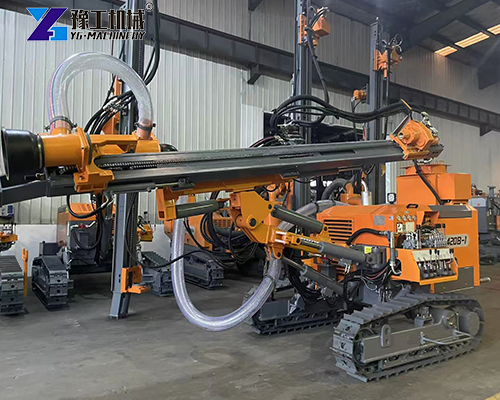
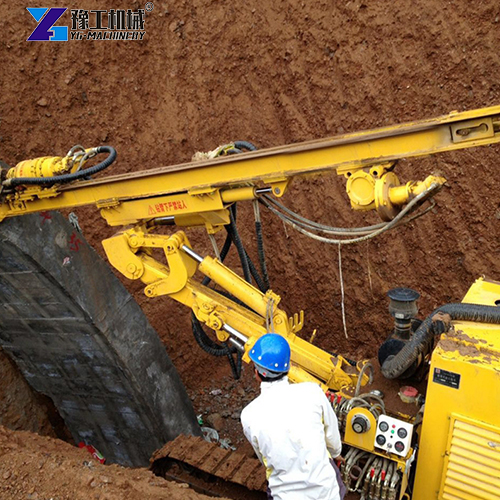
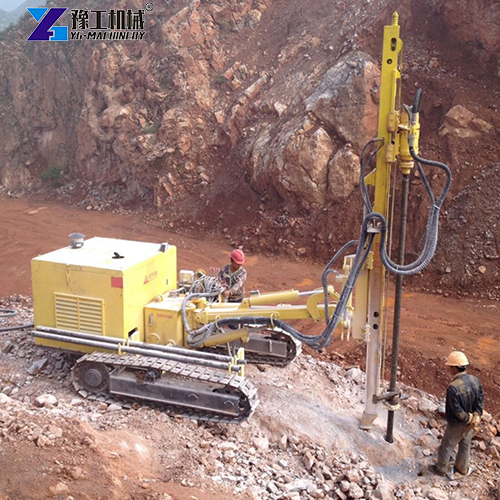
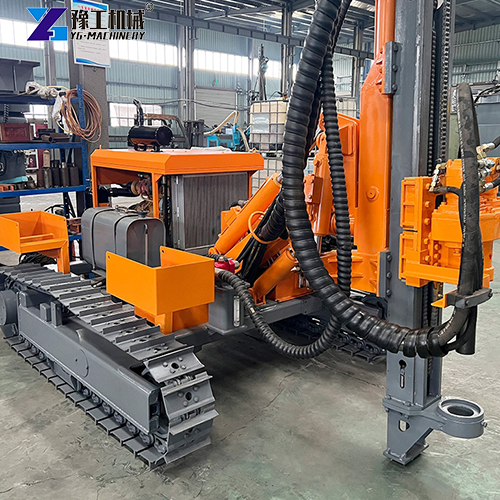
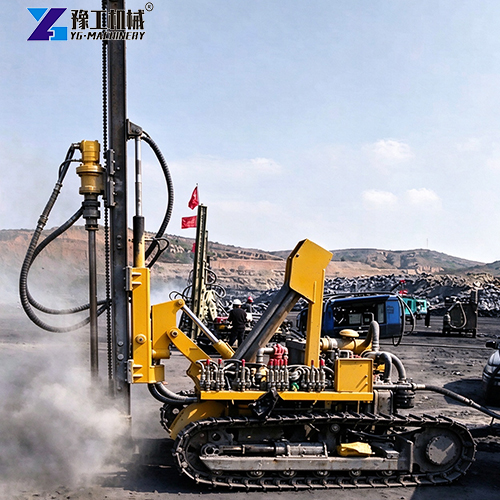
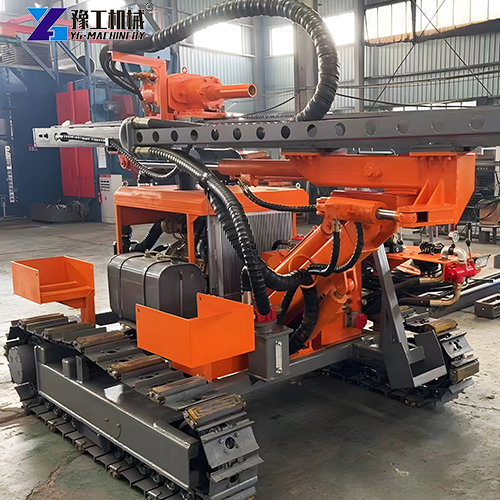
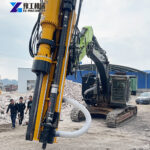
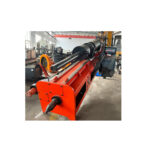
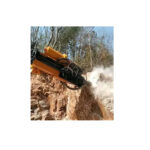
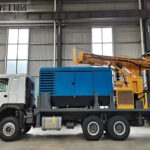
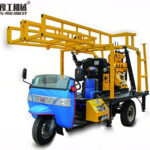
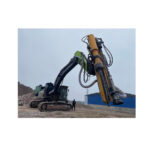
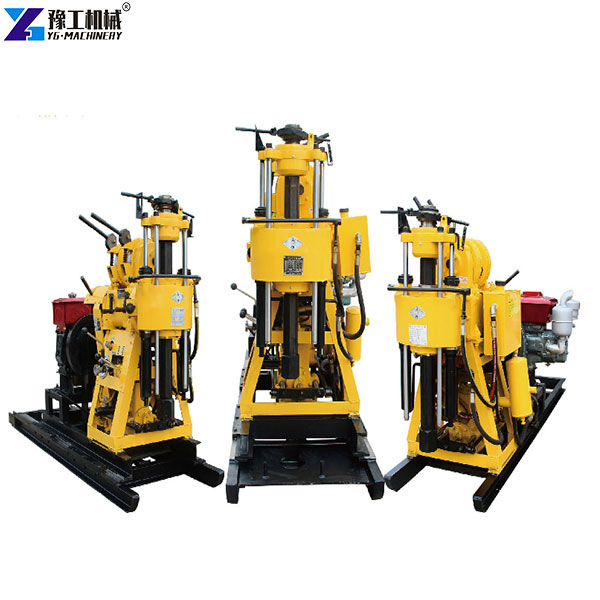
DTH drilling rigs play an important role in modern open-pit mines, quarries, hydropower projects, railway works, and large earth-rock projects. A down the hole drilling machine uses a hammer set at the bottom of the hole to send impact force straight to the bit, so it can drill efficiently in medium-hard rock, hard rock, and abrasive rock formations. With an adjustable drilling angle from 0° to 90°, it handles vertical holes, inclined holes, horizontal holes, and underwater drilling for various construction needs.
DTH Drilling Rig vs Top Hammer Drill: Key Differences
Both are impact-rotary rock drilling machines, but they differ in hammer placement and energy transfer. A top hammer drill has its drifter mounted on top of the drill rod, and impact energy travels down the rods to the hole bottom. For a DTH drilling rig, the hammer sits directly behind the bit inside the hole.
Factor
DTH Drilling Rig
Top Hammer Drill
Hammer position
At the bottom of the hole, just above the bit
At the top of the drill string, outside the hole
Energy transfer
Direct impact on the bit, with minimal loss
Impact travels through drill rods, with more loss as depth increases
Best rock conditions
Medium-hard to hard, abrasive rock
Softer to medium-hard rock
Hole depth
More stable performance in deeper holes
Better suited to shallow and medium-depth holes
Hole straightness
Generally better, especially at depth
May deviate more as hole depth increases
Typical applications
Mining blastholes, quarries, hydropower, large-diameter rock holes
Short blastholes, tunneling, road construction, smaller-diameter holes
Equipment demand
Requires compressed air for the DTH hammer
Usually lower initial investment and simpler tooling
DTH drilling is generally preferred when hole diameter, rock hardness, or hole depth increases, because the hammer strikes the bit directly at the rock face. Top hammer drilling can be faster and more economical for shorter holes and smaller diameters.
down the hole drill rig
down the hole drill rig for open pit mining rock drilling
When selecting a suitable down the hole drilling machine, take rock hardness, hole diameter, hole depth, transfer frequency, site conditions, and output targets into consideration.
Rock below medium hardness: Pick YG412. It supports hole sizes Φ90–115 mm, fitted with a 3.5-inch hammer, ideal for regular open-pit blast holes and earth-rock works.
Rock of medium hardness or harder: Pick YG420. It comes with a 4-inch hammer, a Φ90–127 mm hole range, 2,200 N·m rotation torque, and longer feed travel, built for hard rock and heavy-duty drilling.
Frequent site transfer: Both models run at max 2.5 km/h, max gradeability of 25°, and max traction force of 40 kN, making them easy to move between mines and quarries.
Inclined or horizontal drilling: The machine drills at any angle from 0° to 90°, including horizontal drilling. Secure the rig firmly before work to guarantee safety.
High-dust sites: A dust collection system is recommended to improve working conditions and control dust spread.
Normally, this type of drill can reach 20–30 meters per hour. Actual penetration depends on geology, rock hardness, fractures, air pressure, hammer condition, and operator skills.
Site Requirements for Down the Hole Drill Rig
Stable and efficient operation of DTH drilling equipment relies heavily on site preparation. Proper site layout and safety checks before drilling help improve hole quality and reduce machine breakdowns.
Solid ground: Place the rig on firm, flat ground. Use pads or leveling steps on soft or uneven ground.
Matched air compressor: Air pressure and flow must meet hammer requirements. Insufficient air supply weakens impact power and cuttings removal.
Clear working zone: Remove loose rocks and obstacles before drilling. Keep unauthorized personnel away from hazardous areas.
Safety for angled & horizontal holes: For 0°–90° angled drilling, confirm the feed beam, tracks, and supports are stable to avoid shifting or tipping.
Dust and cuttings control: Clean dust boxes and filters regularly if dust collection is installed, and ensure compressed air flushes rock cuttings out.
Operator training: Operators must know machine controls, emergency stop, hydraulic rules, and safe compressed air operation.
Maintenance Tips to Extend the Service Life of Down the Hole Drill Rig
Regular maintenance cuts downtime and extends the service life of wear parts, including hammers, bits, drill pipes, and hydraulic components.
Daily air and hydraulic inspection: Check for air leaks, oil leaks, loose joints, abnormal pressure, and strange noise before startup.
Correct hammer lubrication: Add lubricant as required. Poor lubrication is a top cause of early hammer failure.
Regularly check on bits and drill pipes: Replace worn bits promptly. Check drill pipe threads, bending, and wear.
Adjust drilling parameters properly: Do not force feed when penetration drops. Tune air pressure, rotation speed, and feed force based on rock conditions.
Clean the rig after every shift: Clear dust and rock debris from feed beam, chains, tracks, rotary head, and cooling areas.
Service dust collection system: Empty dust boxes and inspect filters regularly to maintain good dust suppression.
Follow wear part cycles: At 8 hours per day of standard operation, one hammer lasts roughly one week and one bit lasts about three days. Real service life changes with rock abrasiveness, lubrication, and air pressure.
Proper parking and storage: Park on level ground after work, release system pressure, and protect cylinders, hydraulic hoses, and electric parts from moisture and dust.
Q: Can down the hole drilling machine drill underwater blast holes? Are there special requirements?
Yes, it works for underwater rock blasting. You need good sealing protection for hammers and pipelines, plus a proper cuttings removal plan. Make a special construction plan according to water depth and flow before starting to keep work safe.
Q: What size air compressor does DTH drilling equipment need?
Match air pressure and flow based on hammer size, hole diameter, hole depth, and rock type. Larger hammers, bigger holes, or deeper holes need more air supply. Contact us for professional advice.
Q: Can it work in tunnels or enclosed spaces?
This series is mainly designed for open-pit projects: mines, quarries, railways, hydropower, earthwork, and underwater rock blasting. Tunnel work needs extra evaluation for ventilation, dust, and clearance. The feed beam is 4,600–5,500 mm long plus 800–970 mm feed extension, which requires large headroom.
Q: Can I order spare parts and get technical support remotely?
Yes. We supply wear parts such as hammers, bits, drill pipes, hydraulic seals, chains, and filters. We also offer remote video guidance for fault checking, maintenance training, and rig commissioning.