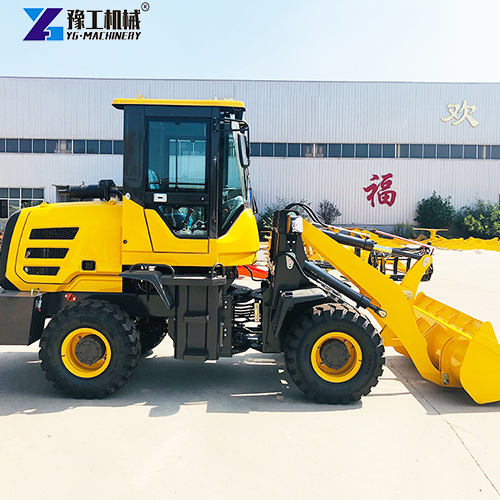
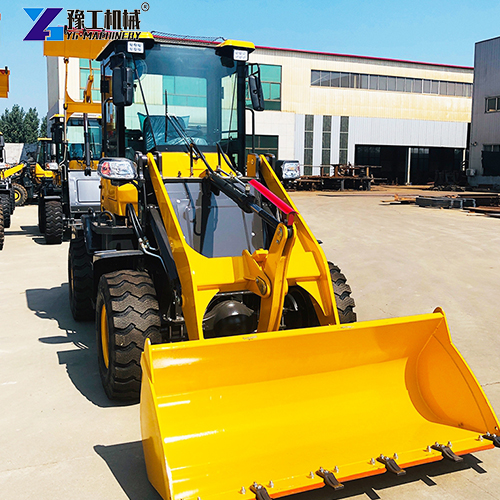
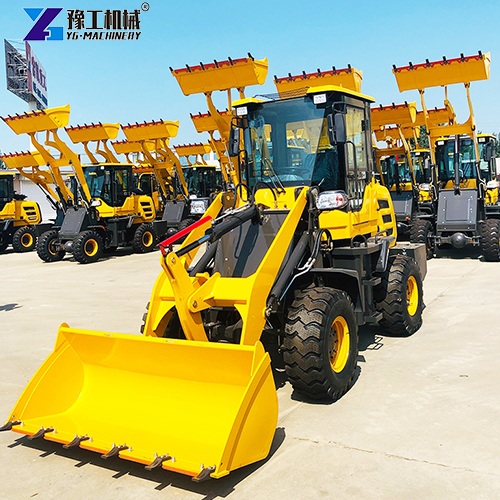
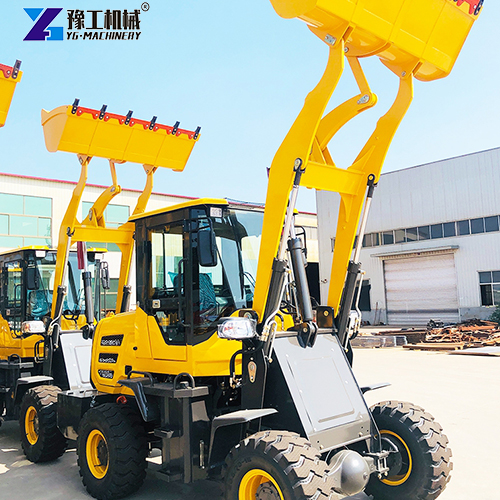
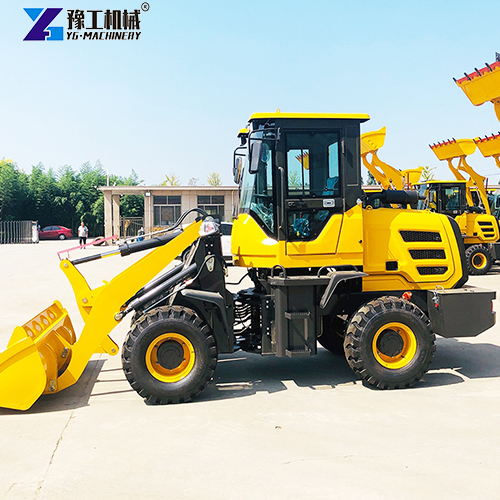
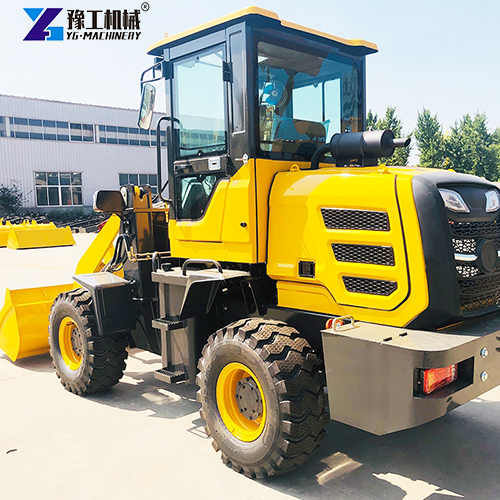
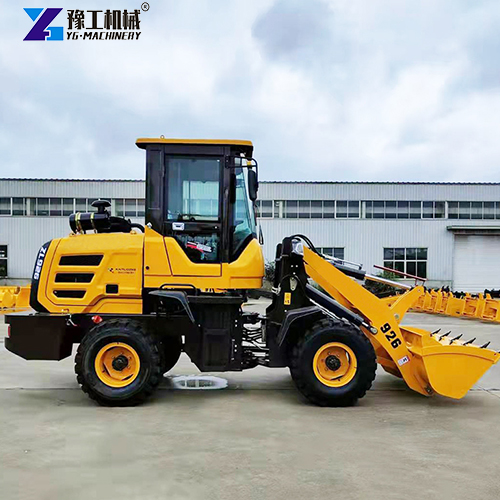
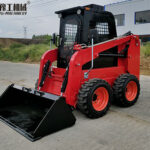
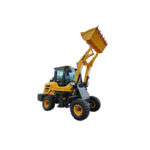
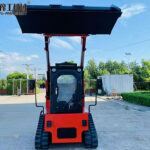
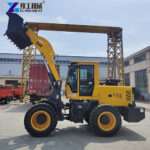
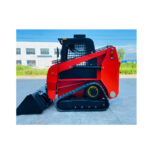
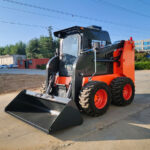
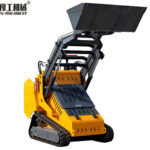
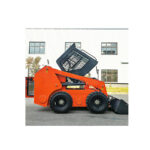
On farms, material yards, construction sites, and even city streets after a snowstorm, you will always see a busy construction front loader. It lifts several tons of material with its sturdy bucket, moves through tight spaces with its flexible articulated steering, and conquers muddy or gravel roads with powerful traction. As an efficient piece of loader construction equipment, it not only replaces dozens of workers but can also switch to a log grab, forklift, or snow plow in just ten minutes by changing attachments.
What Are the Advantages of the YG Construction Front Loader?
The YG series loader construction equipment solves five key user pain points:
Advantage 1: Strong power and fuel economy – Powered by well-known Weifang diesel engines, it delivers stable output and ample torque reserve. Even after 8 hours of continuous work, fuel consumption remains satisfactory, saving users significant fuel costs.
Advantage 2: Very easy to operate, even for beginners – The whole line comes standard with a single-lever control handle, which controls both the lift arm and bucket dumping, greatly reducing operator fatigue. Training time is cut by more than half compared to the traditional two-lever operation.
Advantage 3: Two transmission options available – Mechanical transmission (torque converter + gearbox) is mature, has low maintenance costs, no stalling under heavy load, and is standard on export models. CVT offers smooth, shift-free operation with lower fuel consumption and noise, ideal for urban sanitation and light-duty work. Users can choose based on their actual conditions.
Advantage 4: Flexible drive axle configuration for all scenarios from sanitation to mining – The Isuzu axle (single reduction) has common parts, low maintenance cost, suitable for agriculture and municipal work. The large hub reduction axle (double reduction) multiplies torque, has strong impact resistance, and is suitable for gravel yards and mines. We can provide the best solution based on the customer’s target market (e.g., Southeast Asia prefers Isuzu axle, Middle East prefers large hub reduction axle).
Wide Application Scenarios of YG Construction Front Loader
How many jobs can one construction wheel loader handle? Here are four main areas:
Agriculture
Grain farmers: Use the grain bucket to load wheat, corn, and rice efficiently during harvest, moving over 100 tons per day, shortening harvest time and solving labor shortages.
Livestock farmers: Quickly move bales of hay or feed, and clean animal waste efficiently, keeping the farm clean and reducing disease risk.
Mixed farms: Besides daily material handling, it can also level land, repair roads, and assist small construction projects – one machine for multiple tasks.
Industry and Construction
Sand/gravel yards: Quickly load sand and gravel, work with dump trucks to increase yard turnover and reduce waiting time.
Coal yards: Load, stack, and transfer coal. The large hub reduction axle easily handles uneven surfaces on coal piles.
Scrap recycling stations: Efficiently handle and move various recyclables (scrap metal, paper, plastic bottles), optimizing site utilization and increasing dispatch speed.
Construction sites: Clear construction waste, feed concrete mixers, level ground, move rebar – one loader can work with multiple crews.
Forestry and Warehousing
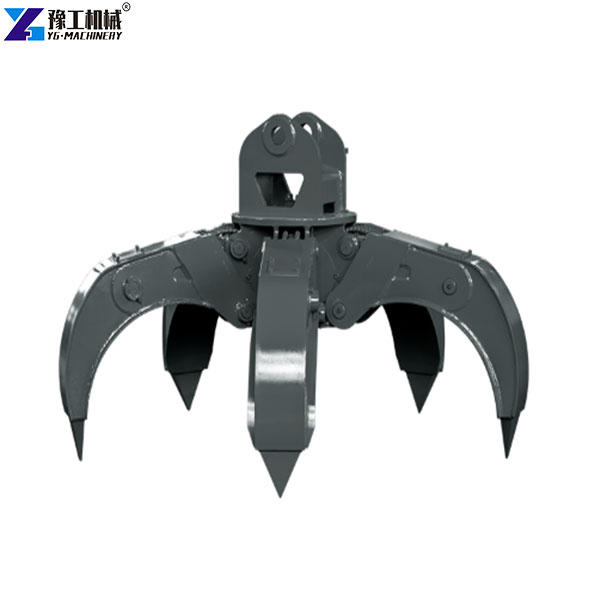
Timber yards: Equipped with a professional log grapple, it quickly grabs, lifts, and loads logs and lumber, greatly improving timber handling efficiency and reducing safety risks of manual lifting.
Ports/warehouses: Meets high-efficiency loading/unloading needs at ports, yards, and warehouses, and handles short-distance, heavy-weight cargo transfer such as pallet moving inside containers.
Municipal and Environmental
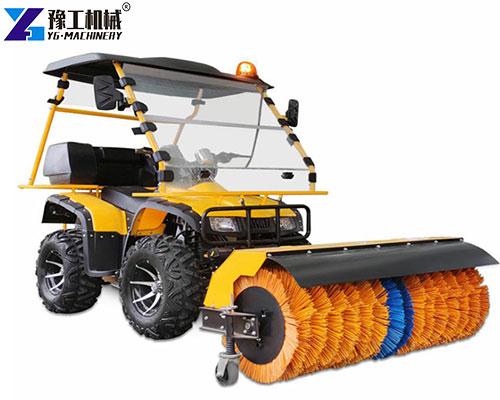
Winter snow removal: Quickly change to a snow plow or pusher to clear snow from main roads, squares, and airport runways, keeping traffic moving – a winter necessity for northern municipal units.
Daily material handling: In urban infrastructure and environmental maintenance, flexibly load and transport loose materials like sand, dirt, and green waste.
What Attachments Can a Construction Front Loader Use?
Attachments allow a construction front loader to do many jobs with one machine. Here are six common attachments and their typical uses:
Standard bucket: The most common configuration, for loading and moving loose materials like sand, gravel, coal, and grain.
Grapple / rotating grapple: Grabs irregular materials like wood, straw, or scrap metal. The rotation function lets you adjust the angle during loading/unloading for more flexible operation.
Bale clamp: Designed for moving fluffy materials like hay bales, cotton bales, or straw bales – holds firmly without breaking the bale, protecting material integrity.
Bucket fork/stone fork: Combines bucket and forklift functions – can fork bagged goods or stone, and also level ground.
Grain bucket: Designed for grain depots and farms. Larger volume than a standard bucket, low-residue bottom design for clean dumping, reducing grain waste.
High-efficiency snow plow: Great for clearing snow from roads, factory areas, and squares. Quick to install, wide clearing path, suitable for large areas.
By quickly changing attachments, wheel loader equipment can handle different seasons and different working conditions, greatly reducing equipment purchase costs and idle time.
YG construction front loader
Frequently Asked Questions About Construction Wheel Loader
Q: What do “rated load” and “bucket capacity” mean? How to choose the right match? Rated load is the maximum weight (in tons) that wheel loader equipment can safely and stably lift under standard conditions. Bucket capacity is the volume (in cubic meters) that the bucket can hold. When choosing, calculate based on material density: for example, grain density is about 0.75 t/m³, so a 2-ton loader can use a grain bucket of 2.5 m³ or more. Gravel density is about 1.6 t/m³, so a 2-ton loader can only use a gravel bucket of about 1.2 m³. Always match according to your actual material to avoid overloading and structural damage.
Q: What are the main differences between the 920, 930, and 940 series loaders? These numbers represent the rated load class (2-ton, 3-ton, 4-ton). The main differences are in machine weight, engine power, bucket capacity, drive axle type, and suitable working conditions. Simply put: the 920 is for light jobs like small farms and warehouses; the 930 is a general-purpose model for sand yards and construction sites; the 940 and above are for heavy continuous work like mines and coal yards.
Q: How to choose the right tires for a Construction Front Loader? There are two main choices: Pneumatic tires provide good cushioning and traction, suitable for roads, ports, farms, and other normal surfaces, and are relatively low-cost. Solid tires are extremely wear-resistant and puncture-resistant, suitable for harsh environments with lots of crushed stone, scrap metal, and glass shards, but have poorer cushioning and a higher cost. The final choice depends on your specific working conditions, surface type, and budget.
Q: What payment methods do you accept? We accept common international trade payment methods such as T/T, and we support flexible negotiation based on industry practice. Specific terms can be confirmed when signing the contract.
Q: What is the delivery time for equipment? Standard models are usually in stock with a lead time of only 2-4 weeks. Customized models (special attachments, colors, configurations) generally take about 2-3 months, depending on the specific plan.
Q: Do your products meet certification standards for target markets? Yes. We have obtained major international certifications such as CE and EPA. Please inform us of your specific target market (e.g., EU, USA, Southeast Asia) when requesting a quote, and we will provide the corresponding compliance certification documents.
Q: What is the warranty period for the product? We offer a very competitive whole-machine warranty: 12 months or 2,000 working hours from the date of shipment (whichever comes first). Consumable parts are not covered under warranty.