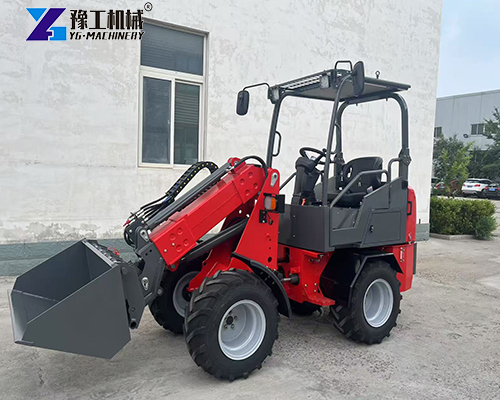
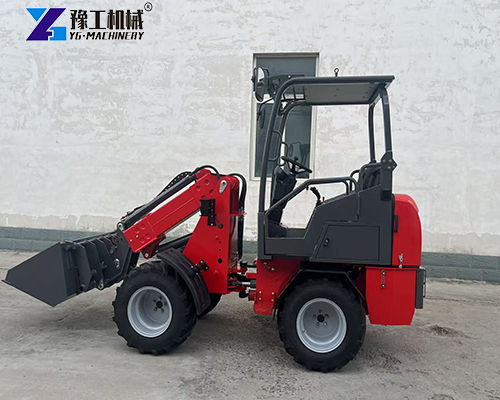
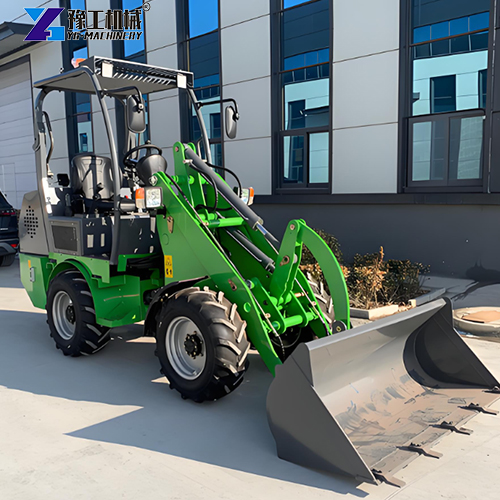
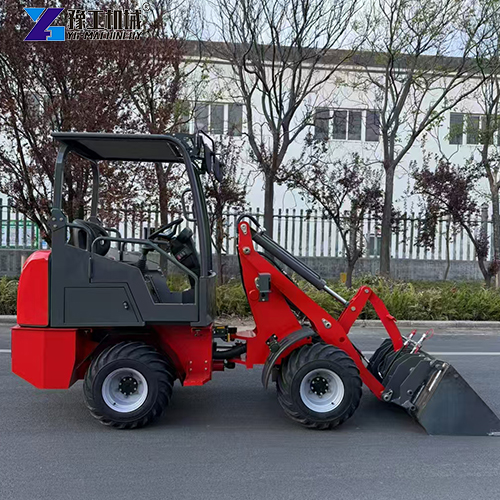
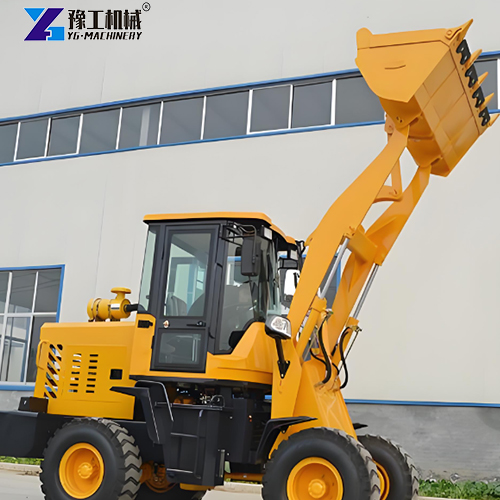
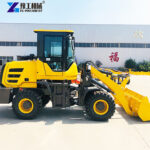
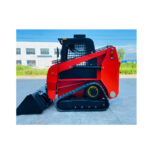
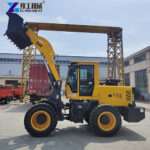
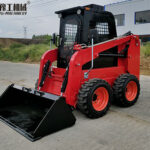
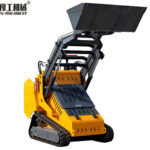
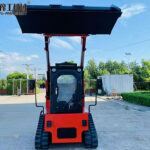
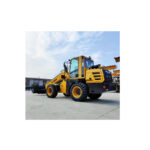
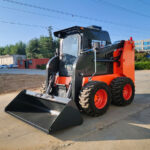
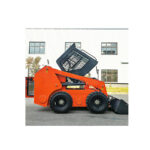
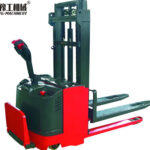
A high-quality electric front loader needs to meet three requirements simultaneously: flexible enough to operate in confined spaces, powerful enough to handle daily loading and unloading work, and cost-effective enough for long-term operation. This popular electric compact wheel loader from YG boasts an overall width of only 1160 mm, a rated load of 0.8 tons, and supports 4–5 hours of continuous operation. It is a tailor-made solution for indoor warehouses, small construction sites, farms, and pastures.
How to Choose Between an Electric Front Loader and a Diesel Loader?
When choosing between an electric front loader and diesel models, you can make your decision based on the following five factors to select equipment best suited to your working conditions.
First, consider the working environment. If you mainly operate indoors in warehouses, food workshops, breeding farms or enclosed factories where strict limits are set on exhaust emissions and noise, the electric front loader is undoubtedly your top choice. In contrast, diesel loaders are more commonly used in open-air mines and earthwork construction sites.
Second, calculate daily working hours. Count the actual loading hours per day. If daily operation lasts within 4–5 hours and fixed charging is available during lunch breaks or after work, the electric model can fully satisfy your workflow. If continuous operation exceeding 8 hours is required with no opportunity to stop and recharge, diesel loaders gain an edge thanks to uninterrupted power supply.
Third, evaluate the convenience of energy refilling. Check whether stable power supply and proper charging space are available on site. Charging electric machines is convenient if power access is reliable. If your work locations change frequently and are far from power grids, the widespread network of gas stations makes diesel equipment more flexible.
Fourth, weigh long-term operating costs. Estimate annual energy costs based on local electricity and diesel prices. Also compare maintenance requirements for the two types (electric machines have simpler structures and fewer maintenance items). Take long-term expenditure into your procurement budget and pick the option with lower total cost.
Fifth, consider equipment flexibility. If you work in narrow areas with limited passageways, a compact front loader delivers obvious operational benefits with its small turning radius and lightweight body. This advantage matters greatly for indoor worksites or urban renovation projects.
What Are the Application Scenarios for Electric Front Loader?
The application scope of the electric front loader is broader than many people expect. It performs particularly well in the following scenarios: Indoor Warehouses & Logistics Centers: Zero-emission design allows safe operation in enclosed spaces for cargo handling and site cleaning. Low noise prevents disturbance to surrounding office areas.
Agriculture & Animal Husbandry: On breeding farms, feed warehouses, and greenhouses, it can clear manure, transport feed, and load/unload fertilizer. Zero exhaust is better for animal health and crop growth.
Small Construction & Municipal Projects: For narrow construction sites, community renovation and road maintenance, the electric compact front loader features a compact, flexible body and a 2610 mm turning radius. It can easily access areas unreachable by ordinary large machinery.
Food Processing & Pharmaceutical Industry: These sectors enforce strict hygiene and environmental standards. The smokeless and odorless small front loader for sale serves as an ideal material handling machine.
Why Choose YG Electric Front Loader?
Among many electric front loader brands, YG products possess distinctive competitive strengths.
Solid Performance Configuration: A rated load of 0.8 tons, 0.3 m³ bucket capacity, and 3140 mm lifting height easily meet most small-scale loading tasks. With a dumping height of 1780 mm, dumping reach of 980 mm and 30° gradeability, it operates steadily under diverse working conditions.
Flexible Compact Body Design: It is only 1160 mm wide and 3840 mm long with a 2610 mm turning radius, enabling agile steering and smooth movement inside narrow aisles and warehouse corridors. The 7° rear axle swing design maintains good wheel contact on rough ground.
Reliable Electrical System: The 72V high-voltage platform paired with a 200Ah large-capacity battery supports 4–5 hours of continuous operation, covering most daily workloads. The 5000W hydraulic motor provides ample power for all movements.
Low Operating Costs: Compared with diesel loaders, the YG electric model helps users cut considerable daily energy and maintenance expenses. It is a worthwhile investment for customers focusing on long-term returns.
Routine maintenance for the electric compact wheel loader is relatively simple.
Daily Inspection: Check tire pressure, bolt tightness, and oil leakage of cylinders and pipelines before and after each shift. Charge the battery promptly when the remaining power drops to around 30% to avoid deep discharge, which shortens battery service life.
Periodic Maintenance: Check hydraulic oil level and quality, and clean dust on the radiator surface about once a month. Every three months, inspect wear of motor carbon brushes and clean battery terminals to avoid poor contact caused by oxidation. Replace hydraulic oil and filters, and test insulation of drive and hydraulic motors every six months or after 500 working hours.
Important Reminder: The battery pack is a core component. Keep it moisture-proof and waterproof during daily use. Always use a matched charger to prevent overcharging and over-discharging. Proper maintenance keeps your small front loader for sale in good condition and extends its service life.
Contact YG
If you are interested in the YG electric front loader and want to know more product information or get quotations, feel free to contact us. Our professional team will recommend the most suitable model and configuration according to your specific working conditions.
How to reach us: Submit an inquiry form via the official YG website or call our sales hotline to receive one-on-one product consultation. Whether you need product specifications, after-sales service, or spare parts supply, YG provides professional and timely support. Choose the YG electric compact wheel loader to make your construction work more efficient, eco-friendly, and economical.