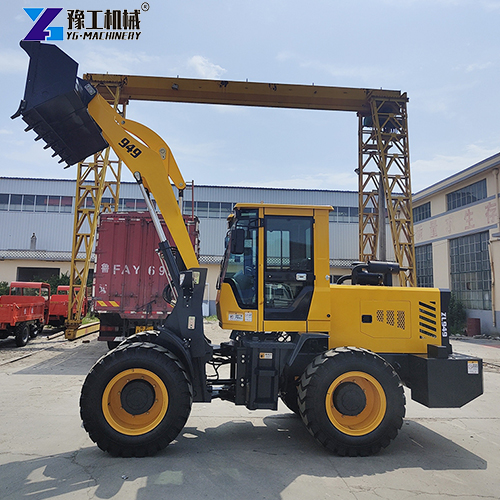
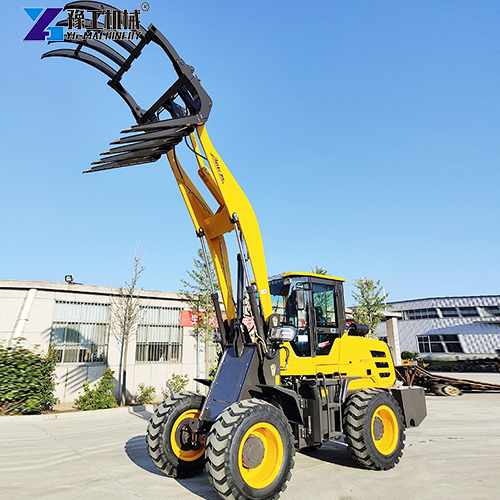
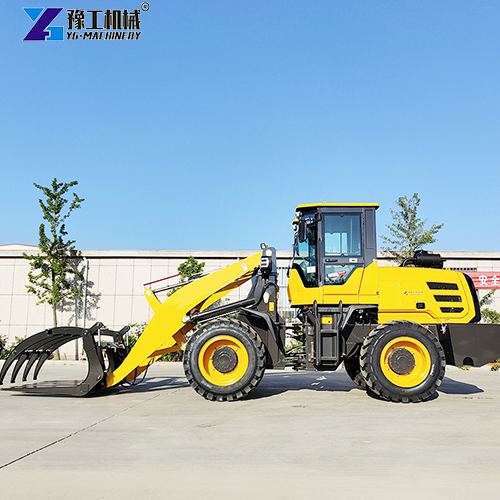
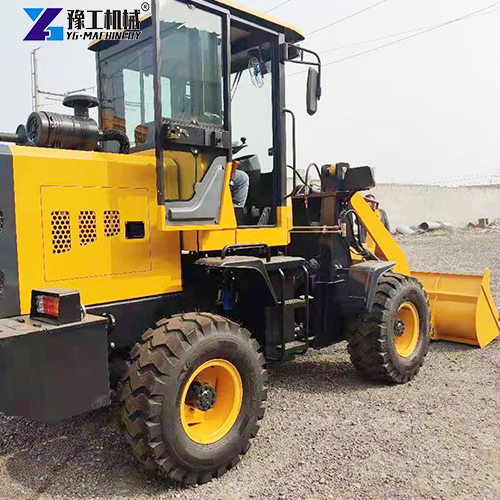
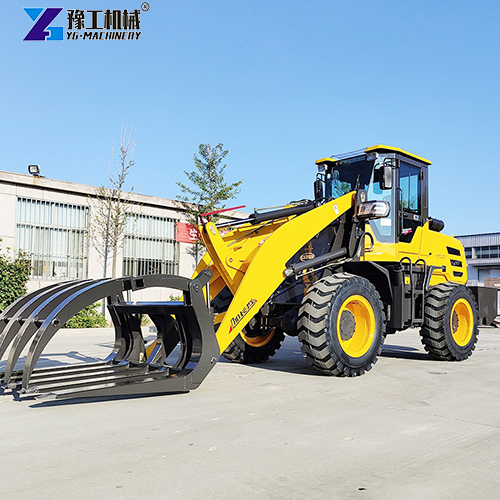
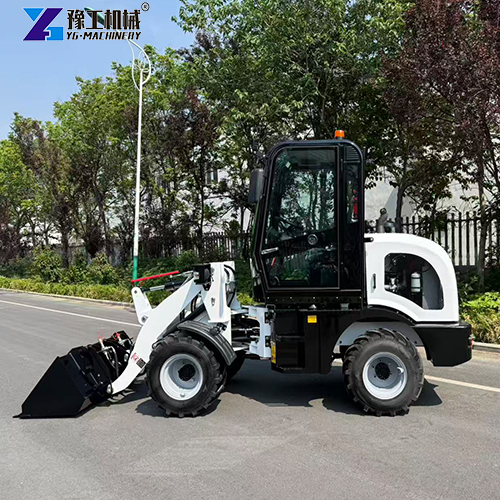
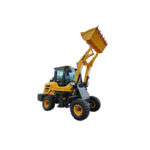
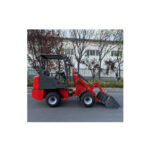
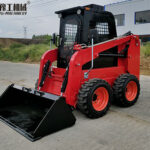
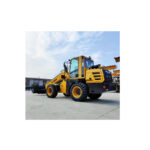
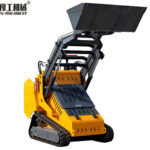
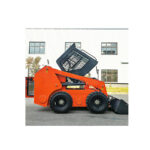
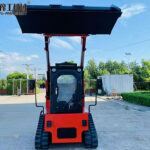
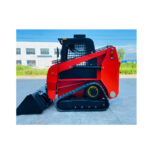
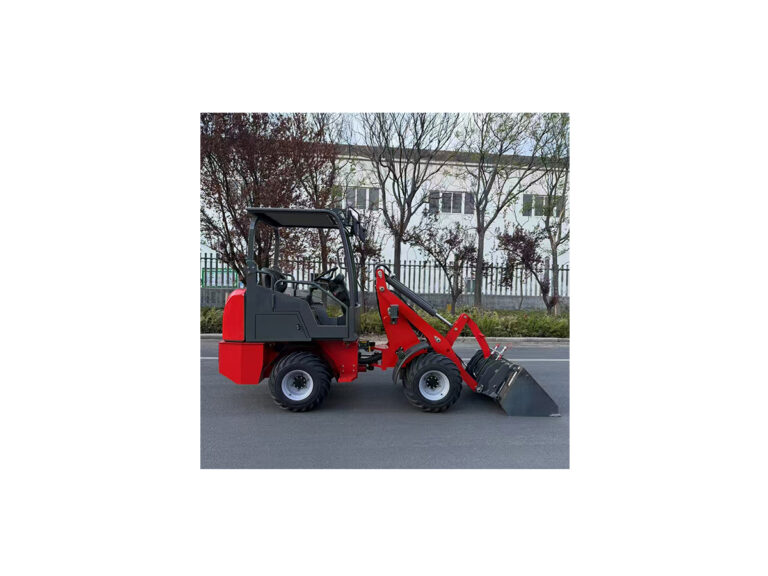
If you are looking for equipment that can load bulk materials efficiently, move quickly between work sites, and adapt to various working conditions, the construction wheel loader is definitely your best pick. Compared with traditional crawler loaders, wheel loaders run faster on roads and cost less in tires. Compared with skid steer loaders, they have larger bucket capacity and a higher dumping height. As a professional manufacturer of wheel loader equipment, our YG product line covers models from 2 tons to over 4 tons. You can also choose mechanical transmission or hydrostatic transmission, Isuzu axles, or large wheel-side axles based on your needs.
Analysis of the Chassis and Transmission System of the YG Construction Wheel Loader
The transmission system determines the traction, fuel efficiency, and operation comfort of the construction wheel loader. The YG series offers two types of transmission and two options for drive axles. Details are as follows:
1. Transmission: Mechanical Transmission vs Hydrostatic Transmission
Mechanical Transmission (Hydromechanical Drive)
Working principle: The engine power boosts torque via the torque converter, then shifts between high and low gears through the mechanical gearbox.
Features: Transmission efficiency reaches over 90%. It has a mature and durable structure, with easily available repair parts. The torque converter automatically amplifies torque during heavy-load start-up, so the machine will never stall.
Application scenarios: Medium and large loaders, heavy-duty export models. YG920 comes standard with this configuration and is well-received by users in Southeast Asia and Africa. In areas with limited maintenance conditions, the durability and easy repair of mechanical transmission are essential.
Hydrostatic Transmission (Hydrostatic Drive)
Working principle: Power is transmitted directly through variable pumps and variable motors. There are no fixed gears, enabling stepless adjustment of driving speed and engine speed.
Features: Extremely smooth operation with no gear shift jerk. It cuts fuel consumption by 5% to 10% compared with mechanical transmission. The whole machine runs quietly, so operators feel less tired after long hours of work.
Application scenarios: Small loaders, electric loaders, urban sanitation, and light-duty operations. YG926 and higher models are equipped with or optional for hydrostatic transmission, which is highly popular among European clients due to strict local requirements for operation comfort and environmental protection.
2. Drive Axle: Isuzu Axle vs Large Wheel-side Axle
Isuzu Axle (Single-reduction Axle)
Working principle: Half shafts deliver power directly to wheels with a single-stage main reduction, featuring a simple structure.
Features: Compact structure and highly universal parts, leading to low later maintenance and repair costs. It is ideal for budget-conscious users.
Application scenarios: Light and medium-duty working conditions (models below 3 tons), such as urban sanitation, farm work, and warehouse handling. YG920 and YG926 adopt this axle and sell well in Southeast Asia and Africa.
Large Wheel-side Axle (Two-stage Reduction Axle)
Working principle: It adopts a two-stage reduction structure combining the main reducer and wheel-side planetary gear sets to amplify torque twice.
Features: Excellent load-bearing capacity, higher ground clearance for better trafficability, and strong resistance to impact and bumping. It is not easy to get damaged even when fully loaded on gravel roads.
Application scenarios: Heavy-duty working conditions (models of 3 tons and above), including mines, gravel yards, coal yards, and scrap metal recycling sites with rough roads. YG928 and higher models support small or large wheel-side axles, while YG940 and above are standard with large wheel-side axles, being the top choice for clients in high-end markets like Europe and the Middle East.
Construction Wheel Loader vs Skid Steer Loader vs Backhoe Loader: How to Choose?
When facing different operation demands, you may hesitate between wheel loader equipment, skid steer loaders, and backhoe loaders. Each type has its own strengths, and a proper choice can greatly boost your work efficiency.
The core strengths of the construction wheel loader lie in large loading capacity, high dumping height, and fast transit speed. The YG series is fitted with buckets of 1.8 to 2.2 cubic meters, with dumping height ranging from 3.2 to 3.5 meters and road driving speed of 20 to 30 km/h. It is especially suitable for sites with massive bulk material handling, such as gravel yards, coal yards, grain warehouses, and port yards. The single-lever control is easy to operate, and maintenance is also simple.
Skid steer loaders feature a compact body and zero-radius turning. Their width is generally only 1.5 to 1.8 meters, so they can work flexibly in narrow lanes, basements, livestock houses, and other spaces inaccessible to wheel loaders. They support more than 100 types of attachments, including sweepers, breakers, milling machines, and trenchers. One machine can handle various municipal maintenance, landscaping, and small construction tasks.
A backhoe loader is a dual-purpose machine: one end for loading and the other for excavation. Operators just need to rotate the seat to switch functions. It fits occasional trenching, road breaking, and material loading jobs on scattered projects, such as small rural projects, pipeline repair, and road maintenance. It combines two machines into one, saving trouble in equipment transportation and scheduling.
Selection Guide:
If your daily work involves handling dozens of tons of sand, coal, or grain, the construction wheel loader is your best option. If you work in extremely narrow spaces and need frequent attachment replacement, a skid steer loader is more suitable. For scattered projects requiring occasional excavation and loading, a backhoe loader is the most cost-effective solution. The YG team can offer professional suggestions based on your actual working conditions to help you pick the right equipment.
New Market Trend: Electric Construction Wheel Loader
With increasingly strict environmental regulations, especially in Europe, electrification has become an irreversible mainstream trend for construction machinery. According to industry association data, loader sales rose by 27.3% from January to May 2026. Sales of electric loaders jumped by 90.9% year on year, and export volume soared by 208%.
Here are three core advantages of YG electric loaders:
Zero Emission & Low Noise
It produces no exhaust gas and zero carbon emissions during operation. The motor runs much quieter than diesel engines, with the overall machine noise kept below 75 decibels. It meets strict EU environmental standards, allowing night operation in urban areas without disturbing residents. It is also a great choice for grain depots, food factories, and indoor warehouses sensitive to exhaust and noise.
Greatly Reduced Maintenance Costs
The electric drive system has a much simpler structure. There is no engine oil, diesel filter, air filter, belts, water tank, or exhaust system. The annual maintenance cost is over 60% lower than that of diesel loaders. You only need to inspect batteries, motors, and controllers regularly, saving plenty of time and costs.
High Energy Efficiency & Low Operation Cost
The energy conversion efficiency of the motor exceeds 90%, while diesel engines only reach 35% to 40%. Overall, the hourly energy cost of an electric loader is just 30% to 40% of a diesel one. Though the initial purchase price is a bit higher, the price gap can be recovered within 2 to 3 years through saved fuel and maintenance expenses.
European Market Trend
Many EU countries have introduced policies to encourage or mandate emission reduction for off-road mobile machinery, leading to rapidly growing demand for electric loaders. If you target markets with high environmental standards, the electric wheel loader construction equipment will bring you strong competitiveness. Our electric YG series covers various tonnages and configurations. It supports fast charging: 80% charge in 1.5 hours, and can work continuously for 6 to 8 hours on a full charge, enough for a standard work shift.
Our construction equipment wheel loader of the YG series has earned a solid reputation across the globe. Here are five reasons to choose us:
Flexible Configurations & Customization
We provide multiple combinations: models from 2 tons to over 4 tons, mechanical or hydrostatic transmission, Isuzu or large wheel-side axles, diesel or electric power. We tailor exclusive solutions for every client. Just tell us your working conditions and budget, and we will match the optimal configuration for you.
Reliable & Mature Supply Chain
Our machines are equipped with well-known Weifang diesel engines, standard 265/280/300 series gearboxes, as well as Isuzu or large wheel-side drive axles. All core parts are proven models with widely available spare parts, so you never need to worry about maintenance.
Complete International Certifications
Our diesel loaders have obtained mainstream international certifications, including CE and EPA, and our electric loaders have also completed relevant certification procedures. Please inform us of your target market, such as the EU, Southeast Asia, when requesting a quote, and we will provide the corresponding compliance documents.
Fast Delivery & Reliable After-sales Service
Standard models like YG920 and YG930 are usually in stock, with a delivery time of only 2 to 4 weeks. Customized models generally take 2 to 3 months based on specific configurations. The whole machine enjoys a 12-month or 2000-working-hour warranty (whichever comes first) from the delivery date. We also supply original spare parts long-term and offer remote technical support.
Pick the right construction equipment wheel loader to double your material handling efficiency and cut operating costs. Feel free to contact the YG team. Tell us your working conditions, required tonnage, power type (diesel or electric), and target market. We will recommend the most cost-effective and durable configuration, along with detailed quotations and certification documents.
rebar straightening machine steel bar straightener In recent years, infrastructure construction in Cyprus has maintained steady growth. Multiple key projects …
sludge dredging robot manufacturer factory direct sludge cleaning machine As urbanization accelerates in Nigeria, the demand for desilting municipal drainage …