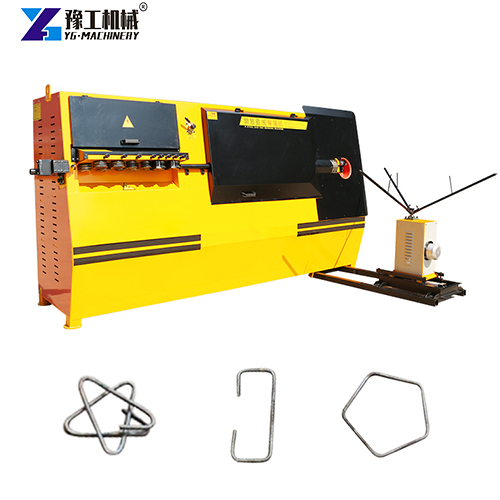
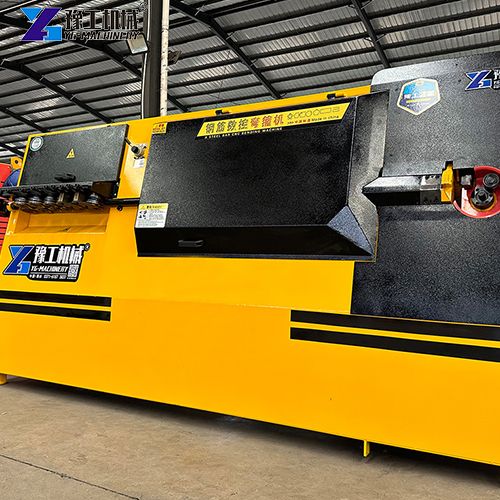
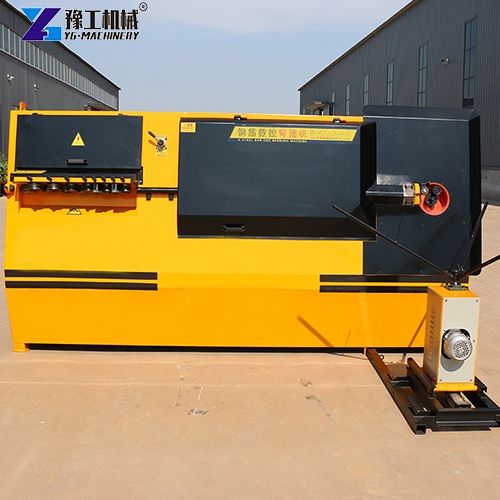
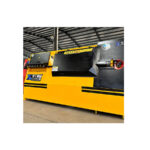
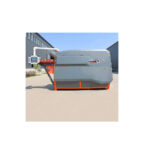
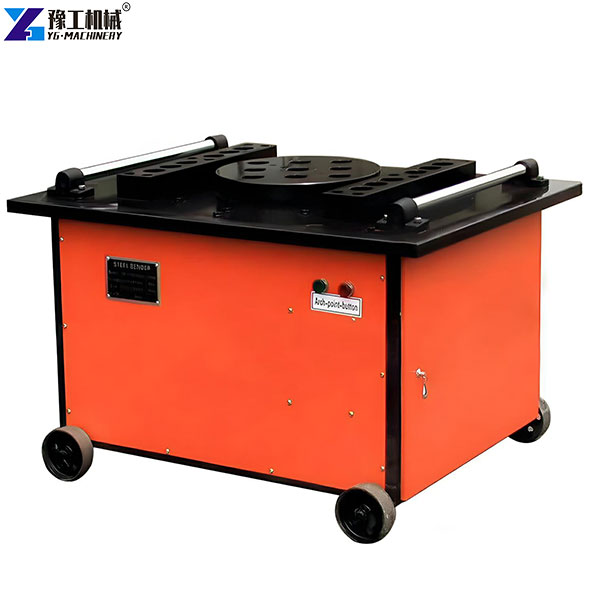
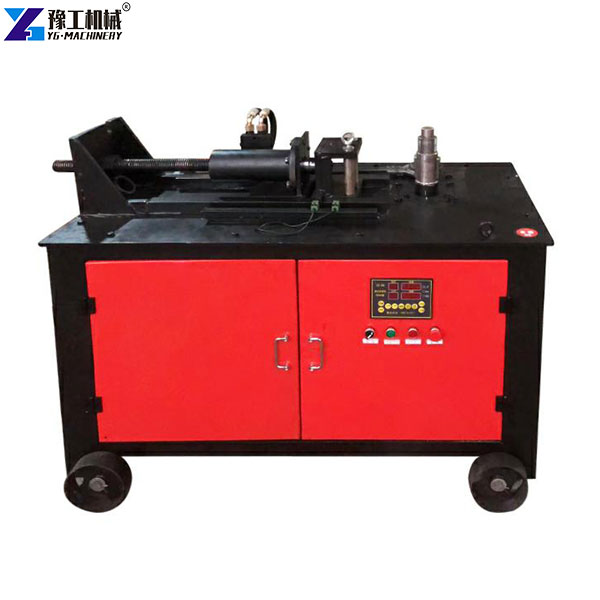
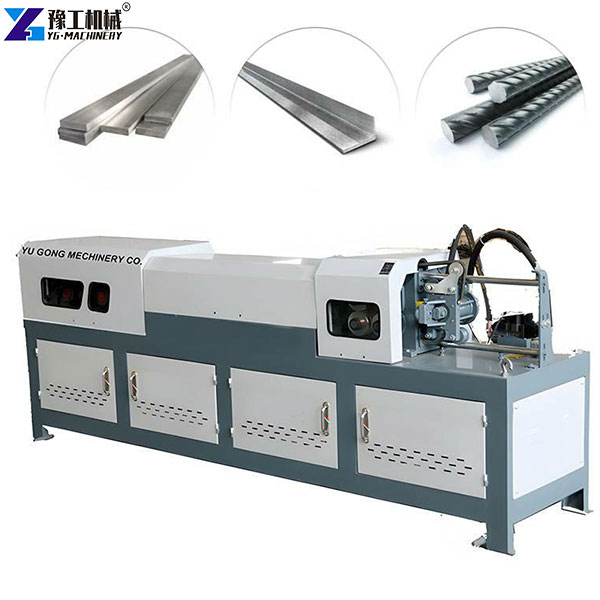
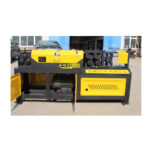
The automatic stirrup bending machine is a CNC automatic stirrup-bending device. It integrates systems like frame-type rotary straightening, digital length measuring, hydraulic cutting, and five-head stirrup bending. Controlled by computer programs, it bends round steel/coiled rib into stirrups in one go. No pay-off stand needed; feeding is the same as ordinary straighteners—ideal for sites. With PLC control, the sliding cutter avoids wear. Want to know how it improves stirrup processing efficiency? Contact us for quotes and product manuals!【WhatsApp/WeChat/Phone】+86 13837122632
Automatic Stirrup Bending Machine Product Features
Precise Straightening: Composed of two sets of horizontally and vertically adjustable straightening wheels, combined with 4 traction wheels, driven by a servo motor, ensuring the straightening accuracy of steel bars and laying a solid foundation for stirrup bender processing.
Efficient Bending & Cutting: The bending and shearing mechanisms are driven by servo motors. The bending arm can rotate and extend/retract at high speed, and the shearing mechanism completes the shearing action quickly, ensuring the bending accuracy of steel bars and demonstrating the efficient performance of the stirrup machine.
Stable Control: Adopts a mature control system with high stability and fault identification function, reducing the risk of shutdown and making its operation more reliable.
Flexible Production: Can design multi-shaped stirrups and contour-type graphics within 60 bending angles, with a storage graphics library, suitable for multi-variety and large-batch production, highlighting the equipment’s flexibility.
Continuous Operation: Can continuously produce stirrup shapes without mid-process shutdown or mechanical adjustment; no need to interrupt processing when correcting bending angles, improving production smoothness.
Labor-saving & Efficient: High production efficiency; each machine is equivalent to the workload of 4 – 6 workers, and one worker can operate it. The labor-saving advantage of the stirrup machine is remarkable.
The equipment is mainly used for stirrup processing in projects such as cold and hot rolling of steel bars, construction, bridges, tunnels, and precast components. As an efficient stirrup making machine, it can improve processing efficiency, reduce labor intensity, and free up manpower, making it suitable for stirrup processing in large-scale construction projects and small-scale construction sites, contributing to project progress.
6 Factors to Consider When Selecting an Automatic Stirrup Bending Machine
Picking the right stirrup making machine depends on your specific production needs. Here are the key decision points.
Factor 1: Rebar diameter range
First screening point — what diameter rebar do you process most often?
Light duty (Ø4–8 mm): YG-1 or YG-2 — for small stirrups in residential buildings
Medium duty (Ø5–12 mm): YG-3 or YG-4 — covers most commercial building demands
Heavy duty (Ø5–18 mm): YG-5-16S — for bridges, tunnels and heavy infrastructure
Notes:
Also check single-wire and double-wire processing capacity
Double-wire mode doubles output but reduces the maximum diameter
If you frequently process Ø12–16 mm rebar, choose YG-5-16S
Factor 2: Single-wire vs Double-wire
Single-wire: processes one bar at a time — for larger diameter, heavier stirrups
Double-wire: processes two bars together — higher output for mass production of small diameters
Most models support both modes — switch according to tasks
If your main work is mass production of small-diameter stirrups (Ø4–8 mm):
Double-wire function can greatly increase daily output
Factor 3: Feeding and bending speed
Speed directly decides daily output:
Feeding speed 60 m/min: YG-1, YG-2 — for small and medium workshops
Q1: What types of rebar can an automatic stirrup making machine process?
It can process cold-rolled and hot-rolled rebar, including plain and deformed bars. The working range varies by model — single-wire operation from Ø4 mm to Ø18 mm.
Q2: Can a stirrup making machine process custom shapes?
Yes. It supports designing and saving custom stirrup shapes, up to 60 bends per shape. The built-in program library covers common shapes (rectangle, square, L-shape, U-shape). Saved custom shapes can be recalled repeatedly.
Q3: Does the machine need to stop when switching shapes?
No. It switches shapes automatically via CNC programs, with no mechanical adjustment or manual tool change. Shape switching works seamlessly during continuous production.
Q4: What accuracy level can it reach?
Length accuracy: ±1 mm for each stirrup
Angle accuracy: ±1° for each bend
This accuracy stays consistent in mass production. Servo drive system and PLC control guarantee uniform quality for every piece.
Q5: Can it process two rebars at the same time?
Yes. Most YG models support double-wire processing for small-diameter rebar (Ø4–10 mm depending on models). Double-wire mode can nearly double daily output when making light stirrups.
YG Machinery – A Reliable Choice
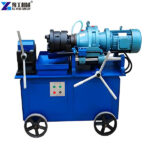
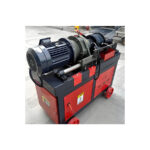
The stirrup bender from YG Machinery, with precise processing, stable performance, and high-efficiency production, is an ideal choice for stirrup processing. We provide complete after-sales service and detailed product instructions, making your purchase worry-free. Choose YG Machinery to make stirrup processing more efficient and hassle-free. Welcome to contact us at any time! In addition, YG also provides equipment such as bending machines, thread rolling machines, rebar straightening and cutting machines, and pipe bending machines.【WhatsApp/WeChat/Phone】+86 13837122632